Market intelligence:
Tariffs and turbulence


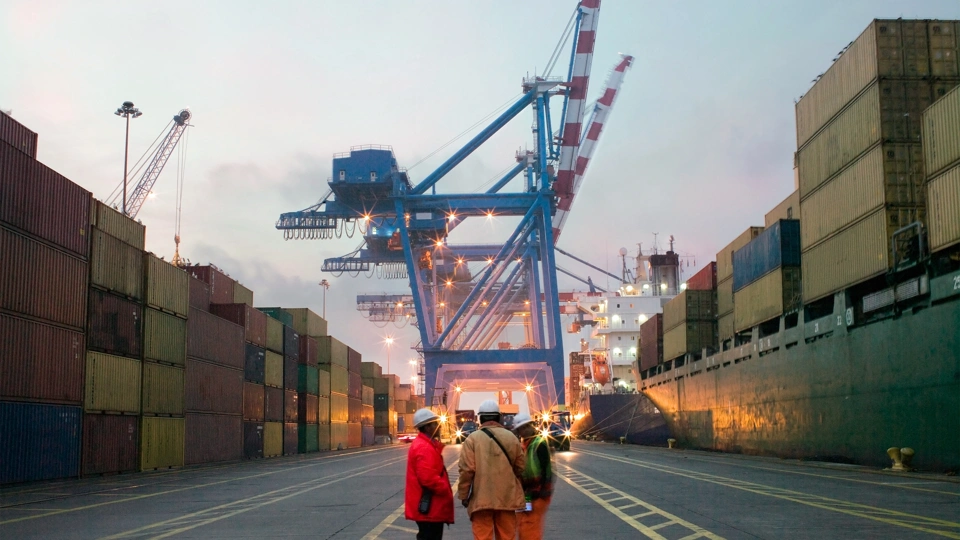

Across the Gulf, the ports are being built. The harder question is whether they'll perform once they open.
The Middle East is in the middle of its most ambitious period of maritime investment yet. New ports, expanded terminals, fresh logistics corridors, industrial zones. Much of the industry conversation still fixes on capacity: berths added, containers handled, how fast the concrete goes down.
Those aren't the most pressing questions. The real test is whether owners can orchestrate genuinely complex programmes while keeping operations strong. They must control costs and create value that lasts long after the ribbon cutting.
This is because today's developments are different in kind, not just in scale. Ports are now planned as parts of larger systems. These include logistics hubs, industrial zones, transport corridors, utilities and digital infrastructure. All are expected to work together from day one. And when these programmes fall short, they rarely fall short where you'd expect.
Start with the word itself. People use ‘ecosystem’ loosely, usually to mean a few large assets sharing an investor. However, a port with a logistics park next door isn't an ecosystem. It becomes one only when those assets are planned, phased and governed as a single system.
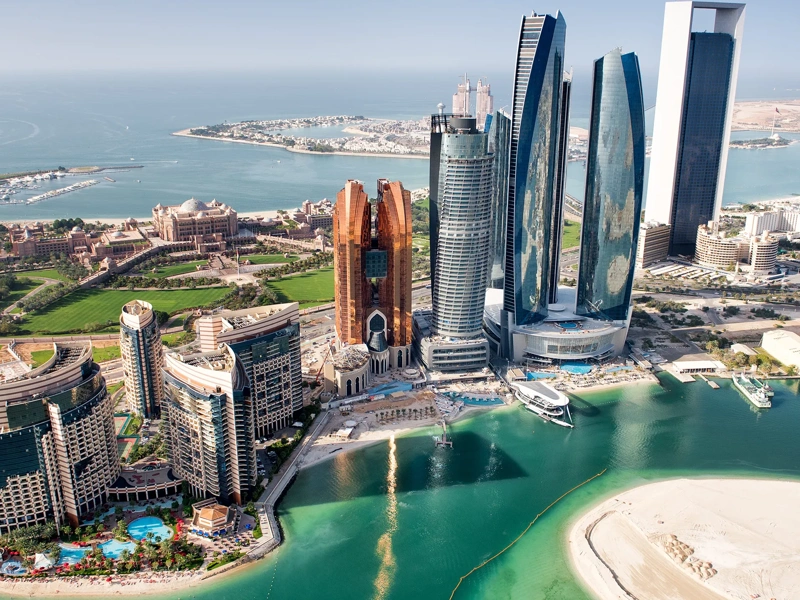
Several Gulf developments genuinely pass that test. The Port of NEOM sits inside Oxagon, with manufacturing, logistics and industrial activity built around it. Iraq's Grand Faw Port underpins the wider Development Road, where the port and the overland corridor are designed to reinforce one another. And Khalifa Port's expansion by Abu Dhabi Ports Group and CMA CGM forms part of the broader KIZAD strategy rather than a standalone investment.
“Here's the point most operators miss. When you're running a true ecosystem, the failures don't sit inside the assets.”
A terminal can be delivered beautifully. A logistics park can open on time. A rail link can perform to spec.
And yet, the system can still fall short, because the risk lives in the interfaces between them. Between quay and yard. Between terminal and logistics park. Between port and rail network. That's the space nobody owns and that's where value quietly leaks away.
The reason interfaces fail is usually commercial, not technical. As a programme grows, it pulls in more contractors, concessions, partners and stakeholders, each with its own contract, its own incentives and its own definition of success.
“Without a single framework to align them, everyone optimises his or her own patch. The result is a collection of well-delivered projects that don't add up to a working system.”
A single integrated commercial framework changes that. It sets shared performance expectations across every party. This way, terminal and rail contractors work toward the same operational outcome. They don’t focus on separate milestones.
It gives owners visibility of cost across the whole programme instead of package by package. And it makes the interfaces someone's explicit responsibility, rather than a gap everyone assumes someone else is covering.
This is the difference between managing contracts and managing a system.
The environment these investments enter has also grown less certain. Recent disruption in the Strait of Hormuz, along with ongoing concerns about Red Sea routes, shows trade is still exposed. It remains vulnerable to events beyond any one organisation's control. Resilience now sits alongside efficiency as a strategic priority.
“For Middle East owners, that means designing the commercial framework to absorb change, not resist it.”
It's why so many investments now extend beyond the port boundary, with rail links, inland logistics hubs and multimodal corridors built as much for resilience as for throughput.
But redundancy only helps if the governance can redirect flows quickly when a route closes. Resilience isn't just another asset on the plan. It's a property of how the whole system is coordinated, and that must be built into the commercial structure from the start.
Ports rarely underperform because of engineering failure. The greater risks sit in four places, and all four are programme challenges rather than technical ones.
None of these are solved with better design. They're solved with better orchestration, clear governance, disciplined commercial control and a delivery approach that treats the interfaces as seriously as the assets.
There's a quieter shift underneath all of this. Port authorities used to have a fairly contained job: build the maritime infrastructure and operate it. Now, many act as master developers, coordinating ports, logistics zones, industrial districts, transport corridors, utilities, digital systems and private capital, all at the same time. That's a different discipline.
“Across the world's strongest maritime gateways, competitive advantage has come from how well ports, logistics, industry and connectivity were integrated, not from any single asset.”
There are just as many examples of world-class infrastructure delivered exactly to plan, only for the wider system to underperform because demand, connectivity or supporting development couldn't keep pace. The lesson is consistent: you can't govern a system with tools built for a single asset.
The Middle East has already proved it can build ambitious maritime infrastructure. The next test is different. It's whether ports, logistics corridors, industrial zones and transport networks can be delivered as genuinely integrated systems that perform from the day they open.
In a market where several ports are expanding at once, the winners won't be the owners who add the most capacity. They'll be the ones who bring the sharpest commercial discipline to the spaces between their assets, aligning every party to a single definition of success.
Get the governance and the commercial framework right, and the infrastructure does what it was always meant to do. Get it wrong, and even a perfectly built port can underperform for years. Building the infrastructure was always only half the job.

Sign up for our quarterly newsletter - trends, market intelligence and expert perspectives.
Sign up for our quarterly newsletter - trends, market intelligence and expert perspectives.