Market intelligence:
Tariffs and turbulence





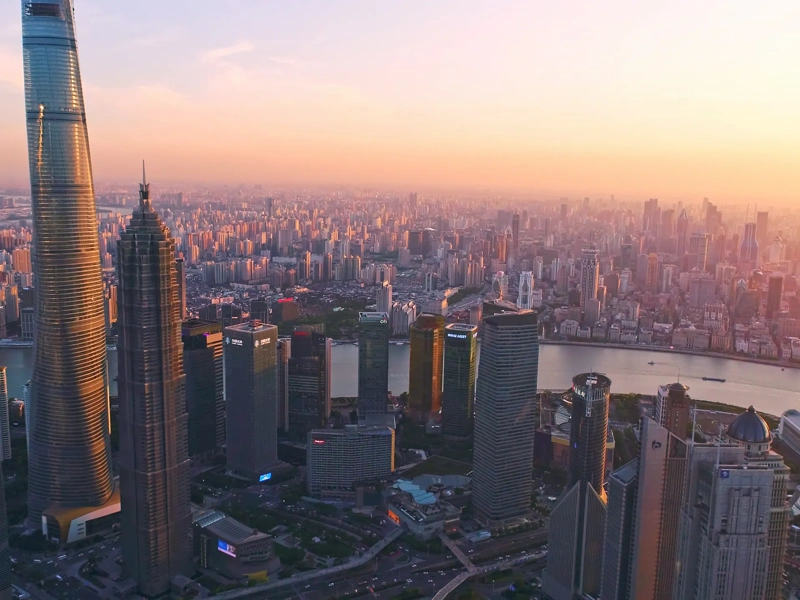
China’s construction industry enters 2026 at a crossroads. The economy met its 5% growth target in 2025 without major stimulus. However, the year was overshadowed by a deep property slump. Real estate investment, sales and funding all contracted, driving a 1% decline in construction activity.
Industrial upgrading and export‑driven manufacturing, particularly in new energy vehicles and electronics, helped sustain supply‑side strength. However, weak domestic demand and falling private sector and foreign investment have underscored persistent structural imbalances.
The outlook for 2026 is more positive, with construction projected to grow by 1.3%. Government initiatives, including financial incentives and new loans, are expected to support activity in energy and industrial sectors.
“A year‑long trade truce following the Xi–Trump meeting in late 2025 may ease tariff pressure and export controls, though its impact on trade flows will take time to appear.”
The National Development and Reform Commission (NDRC), China’s state planner, has announced investment plans worth RMB295bn (HK$328.18bn) in central budget funding, alongside approvals for large infrastructure projects exceeding RMB400bn.
These projects include Guangzhou’s new airport, water resource facilities and major scientific research platforms. These projects are designed to strengthen modern infrastructure and provide momentum for the 15th Five‑Year Plan.
Structural pressures remain significant. Prolonged developer deleveraging, shrinking land lease sales and rising fiscal pressure on local governments continue to weigh on market activity. Contractor insolvency, insufficient credit availability and oversupply in housing and office space are adding further strain.
“Too many contractors are chasing too few projects, intensifying competition and eroding margins.”
Private sector confidence remains weak and fiscal policy continues to be Beijing’s primary lever for near‑term stabilisation. Support for the property market is expected to stay targeted and restrained.
Industrial Policy 2.0 is emerging, focused on modernising traditional industries while accelerating strategic sectors such as renewables, aerospace, advanced batteries, new materials, AI and biomanufacturing.
Despite these advancements, China’s tendering market in 2026 will remain under pressure. Property and infrastructure investment are weak and the pace of new Public Private Partnership and other investment-led projects have slowed.
Despite the slowdown, spending on projects already underway will remain substantial, keeping leverage high. The outlook could improve if property market conditions and local governments' funding stabilise and construction firms feel less cash flow pressure.
The Greater Bay Area remains a strategic focus. Guangdong, Hong Kong and Macau are working to deepen cooperation in technological innovation, infrastructure connectivity and regulatory alignment.
“Progress is already visible in initiatives such as the Dongguan Logistics Park at Hong Kong International Airport and the University of Hong Kong’s new campus in Shenzhen.”
These projects highlight the region’s role as a testbed for integration and innovation.
The State Council Tariff Commission has released the updated tariff schedule for 2026, effective 1 January 2026, which includes provisional tariff cuts on critical components and materials. These cuts support advanced technologies, renewable energy and healthcare.
Meanwhile, certain most-favoured-nation (MFN) tariff reductions have been restored to reflect shifting domestic supply and demand.
China’s construction materials market is expected to grow at a 6.1% compound annual growth rate (CAGR) between 2025 and 2031, supported by steady infrastructure investment, urban redevelopment and sustainable construction practices.
Rising demand for low‑carbon cement, advanced concrete, premium‑grade steel and architectural glass reflects the transition toward efficient and environmentally responsible building materials.
China’s labour market in 2026 is expected to remain highly segmented. Demand will be strong in advanced manufacturing, technology and public services. Sectors like real estate and construction will likely see weaker hiring.
“This divide is shaped by policy priorities and skills requirements, meaning businesses will need to adjust their workforce strategies accordingly.”
Although the headline unemployment rate is expected to stay broadly stable, conditions vary significantly by age, region and sector. Hiring will continue to be selective, influenced heavily by policy guidance and the availability of specialised skills.
Hiring will continue to be selective, influenced heavily by policy guidance and the availability of specialised skills.
Chinese clients are increasingly pursuing overseas investment opportunities, reflecting capital diversification and global expansion.
Advanced manufacturing, data centres and semiconductors stand out as sectors likely to attract more interest. China is strengthening its role in technology‑driven industries and global supply chains.
Businesses that adapt to this transition will be best placed to capture opportunities.
Looking ahead, China’s construction sector will continue to operate in a challenging but increasingly focused environment. Weak private sector confidence remains the core obstacle, shaping hiring decisions, financing conditions and investment appetite across the industry.
With fiscal policy set to remain the main stabiliser and property support staying narrow and targeted, construction firms should expect a market defined by selective activity rather than broad‑based recovery.
Real estate will continue to weigh heavily on the sector. The downturn is suppressing household confidence, straining local government budgets and slowing investment flows. Developers are still working through significant debt burdens and local governments face tighter finances as land‑lease revenues fall. These pressures will limit the pace at which new projects come to market.
“At the same time, China’s export strength, while better than expected, remains concentrated in only a few competitive manufacturing segments.”
This uneven pattern reinforces the split in demand that construction clients are already experiencing: pockets of resilience in advanced manufacturing and energy, alongside continued softness in property‑related work.
Construction and real‑estate firms that stay agile will be better positioned in 2026. They should manage liquidity carefully and align their strategies with policy‑supported sectors. These include advanced manufacturing, energy infrastructure and high‑tech industrial facilities.
Opportunities will appear, but they will be selective and closely linked to structural priorities rather than a broad cyclical recovery.
Firms that move early by strengthening partnerships, improving cost control and targeting the right growth segments will be better equipped to navigate the year and capture value in a market that is changing rather than shrinking.

Sign up for our quarterly newsletter - trends, market intelligence and expert perspectives.
Sign up for our quarterly newsletter - trends, market intelligence and expert perspectives.