Market intelligence:
Tariffs and turbulence


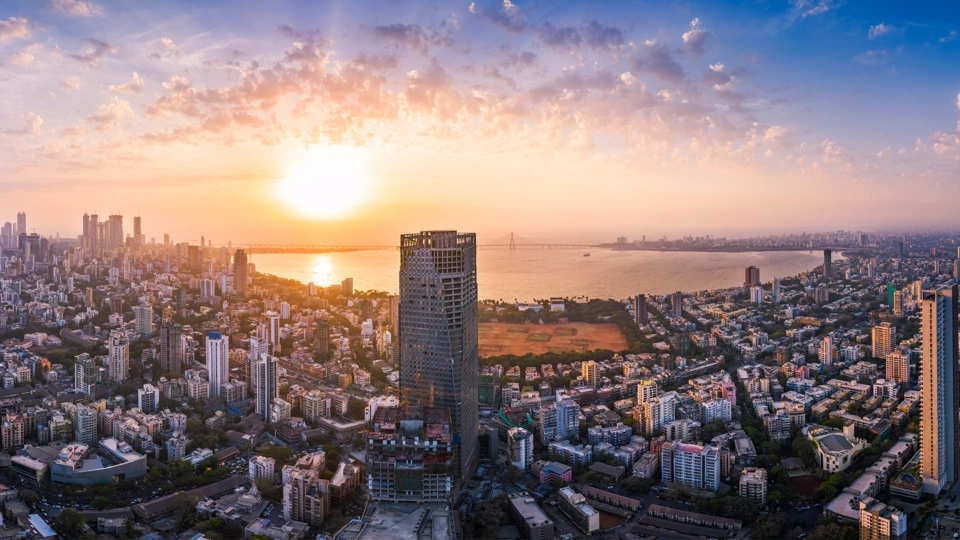
India's construction and real estate kept strong momentum through the first half of 2026, with growth across multiple sectors and regions. Infrastructure, global capability centres (GCCs), data centres, healthcare, manufacturing, hospitality and real estate are all growing. This is creating one of the strongest development pipelines seen in recent years.
In India’s data centre sector alone, projects originally scheduled for 2027 are already being delivered, reflecting the pace at which investment is accelerating. Meanwhile, occupier demand remains a key growth driver, with India now the fastest-growing office market in APAC and on track to add more than 60mn ft² of new office supply annually through 2026.
So far, the defining challenge in the Indian market has been controlling cost. While still important, it’s no longer the only factor shaping investment decisions. As activity accelerates, there’s a shift towards achieving the certainty, capability and capacity needed to meet demand.
India's next phase of growth will be determined not by the availability of opportunities, but by the industry's readiness to deliver them.
The first half of 2026 highlighted the depth and diversity of demand across India's construction market.
North and East
Gurugram continues to lead premium residential development, while Noida is benefiting from investment linked to the Noida International Airport and surrounding infrastructure. Office demand has remained resilient, supported by continued expansion from GCCs and flexible workspace operators.
Across the wider North and East region, sustained investment in infrastructure, industrial and logistics development continues to support market activity.
South
Data centres and GCCs have become major growth drivers, with construction activity in Bengaluru and Hyderabad accelerating faster than originally anticipated. This is supported by more than US$160bn in announced and committed investment in India's data centre sector.
Healthcare has emerged as a significant growth area, with hospital operators planning more than 10,000 new beds across South India over the next three years. Meanwhile, hospitality continues to perform strongly across several cities.
West
Investment remains concentrated in transport infrastructure, data centres, semiconductor and electronics manufacturing, and logistics facilities. Tier-2 cities are attracting increasing interest as businesses expand into new locations.
Mumbai remains a key hub for construction and infrastructure investment, with a construction cost of US$667.0 per m², as found in our Global Construction Market iIntelligence 2026 report. This reflects the scale of development activity concentrated in the city.
The breadth of growth is also increasing pressure on the industry's ability to deliver.
Activity across infrastructure, data centres, GCCs, healthcare and manufacturing is increasing pressure on the industry's ability to deliver at scale.
Three issues are becoming particularly important:
Across 71 of our projects reviewed during H1 2026, average labour shortages were in the range of 30-35%, highlighting the scale of the challenge. In South India, reduced migration of skilled workers from northern states has added further pressure, affecting productivity and timelines.
Lead times for imported equipment packages have extended by two to four weeks compared with earlier expectations.
These challenges are also reshaping project risk management. The focus is no longer solely on managing costs. Increasingly, success depends on securing the people, skills, contractors and supply chains needed to deliver with certainty, mirroring a wider global trend across construction.
India remains one of the world's most active construction markets, but global events continue to affect project delivery.
“Geopolitical tensions and shipping disruption continue to create procurement pressures across MEP systems and electrical infrastructure.”
Currency fluctuations and energy price volatility are also affecting project budgets. While domestic steel and cement supplies have helped provide some stability, cost escalation of 10-15% is being reported where imported raw materials form part of the manufacturing supply chain.
Imported equipment also remains exposed to both cost pressures and delivery delays. As a result, organisations are strengthening procurement and supply-chain strategies. Critical equipment is increasingly being secured earlier to reduce delivery risk.
Across sectors, organisations remain committed to growth. However, these volatile conditions are changing how investment decisions are made, with many taking longer and subject to more rigorous analysis.
Across the market, there’s greater focus on:
Scenario planning, market benchmarking and detailed cost forecasting are becoming standard requirements for major projects.
Many organisations are also adopting phased investment approaches, breaking projects into manageable stages with clear decision points. Earlier contractor involvement is becoming more common, providing greater visibility of delivery risks, procurement challenges and programme constraints before execution.
The common theme is clear: organisations aren’t simply looking for lower costs. They’re looking for greater certainty of delivery.
The growing focus on certainty is changing how projects are planned and delivered.
Data centres and digital infrastructure projects are setting new expectations around speed, coordination and technical expertise. Some occupiers are now seeking fit-out programmes that are up to 30% shorter than traditional schedules. This increases the need for earlier planning and for closer integration between design, procurement and construction.
“At the same time, organisations are adopting live cost dashboards, BIM-enabled project controls, virtual project management platforms and artificial intelligence to support forecasting and risk management.”
Procurement strategies are also evolving. Design-build approaches are gaining traction on complex projects, while organisations are showing greater interest in delivery models that encourage collaboration and balanced risk sharing.
Sustainability is becoming a more prominent consideration. Green building certifications, environmental reporting and embodied carbon assessments are increasingly being incorporated into project requirements from the earliest stages.
What was once viewed as innovation is steadily becoming part of standard project delivery.
The outlook for the second half of the year remains positive. Growth is continuing while capacity becomes the priority.
Infrastructure, GCCs, data centres, healthcare, manufacturing, logistics and hospitality are expected to remain the primary drivers of activity. Public investment continues to provide a strong foundation, while private sector demand across technology, manufacturing and digital infrastructure remains robust.
“However, the delivery pressures experienced during H1 are expected to continue, particularly across labour availability, contractor capacity and specialist supply chains.”
Tender activity is expected to remain healthy, with tender price inflation forecast in the range of 3-5%, driven primarily by labour costs and specialist MEP demand.
India's growth story remains compelling. The challenge now is ensuring that delivery keeps pace with ambition.
Organisations that invest in early planning, stronger risk management, resilient supply chains and modern delivery approaches will be best placed to convert opportunity into successful outcomes. In a market where demand is no longer the primary constraint, competitive advantage will increasingly come from delivery readiness.
As the conversation shifts from cost and commercial management to capacity management, this shift is likely to define the next phase of India's construction market.
Sign up for our quarterly newsletter - trends, market intelligence and expert perspectives.
Sign up for our quarterly newsletter - trends, market intelligence and expert perspectives.