Market intelligence:
Tariffs and turbulence


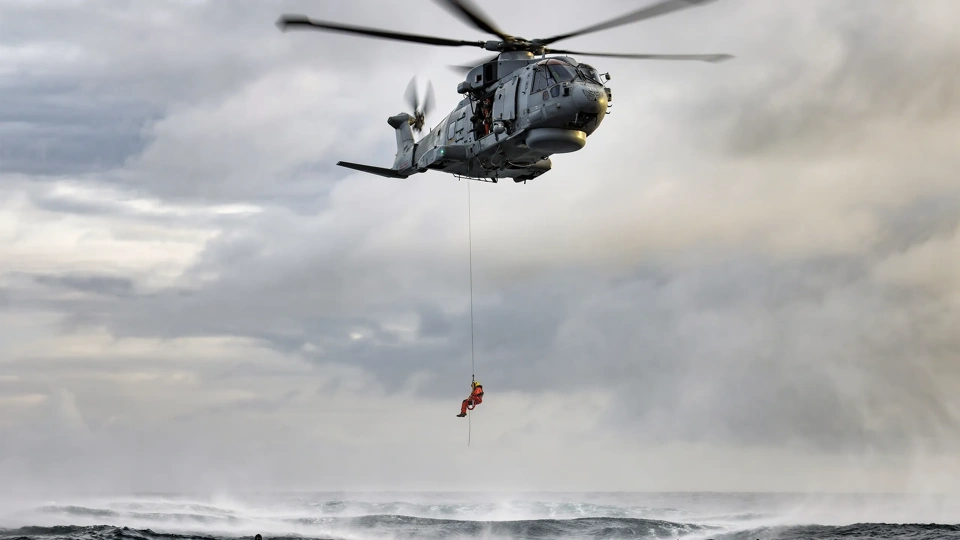
When defence programmes fail, the consequences are rarely contained to cost or schedule. Capability is delayed, operational readiness is affected and confidence in delivery starts eroding.
In high-pressure environments, the point of failure is rarely the result of a single issue. It often comes from a weak visibility, strained supply chains, split decision-making and problems that appear too late to resolve easily.
The real question isn’t whether pressure will appear. It’s whether programmes are structured to spot it early and react before it becomes critical.
Most organisations believe they have supply chain visibility. In practice, visibility is often strongest in the areas closest to direct commercial relationships. Reporting focuses on known suppliers and performance data and this data explains what’s already happened.
As useful as that is, it’s not the same as having a full, forward-looking view of supply chain risk.
Genuine visibility works in two directions simultaneously. It runs vertically, from raw material suppliers at Tier 3 and Tier 4 all the way through to the end user. It also runs horizontally, from the back of the commercial supply chain through manufacturing, logistics, storage and into service.
“Once equipment leaves the commercial supply chain, what happens next is just as important. It’s often harder to see this clearly as part of the whole.”
The most capable programmes connect commercial data, schedule performance, risk indicators and supplier health into a single decision-making environment. But this only works if the underlying data is trusted and interoperable across commercial, engineering, programme controls and logistics systems.
Common definitions, clear ownership and reliable data quality are essential. Without them, you don't get informed decisions. You get another reporting layer.
This isn't about better reporting. It's about shifting from describing problems to anticipating them. It’s also about connecting supply chain performance directly to programme controls and operational readiness outcomes.
In complex defence settings, this also means understanding single points of failure. Many critical components come from single-source suppliers with limited alternatives. Mapping those dependencies across multiple supplier tiers, and understanding the exposure they create, is where predictive analytics adds genuine value.
The direction of travel is clear: away from periodic backward-looking reporting and towards continuous, forward-looking intelligence across the entire network.
Suppliers rarely flag problems before they escalate. The warning signs tend to show up earlier and less obviously: lead times starting to drift, delivery reliability dipping, quality escapes becoming more frequent, capacity running tight, schedule slippage repeating across different parts of the network.
The most effective organisations track trends, not individual events. A slight deterioration across several indicators can point to systemic risk long before operational performance is affected.
Forward projection dashboards, which show where attention is needed before an issue becomes critical, are a practical way of turning that analysis into action.
“There’s a human dimension to supply chain resilience too. Regular engagement with suppliers, not just formal contract reviews, can help surface issues that don’t appear in performance data.”
Changes in tone, responsiveness and behaviour are often signs of pressure building before it’s visible through quantitative indicators alone. In complex programmes, those relationship-based signals can provide an important early warning mechanism.
But those behaviours don’t emerge in isolation. The client plays a central role in shaping the environment in which suppliers operate.
Clarity of demand, realistic planning assumptions, aligned incentives and direct communication all influence whether concerns are raised early or managed quietly until they become harder to resolve.
Programmes that create the conditions for openness and collaborative problem-solving are better placed to identify risk sooner and respond more effectively.
When a critical part of the supply chain comes under strain, the response that works is rarely the one that reaches first for the contract.
Understanding whether the problem is driven by capacity, workforce availability, financial stress, quality concerns or competing demands from other customers enables targeted intervention. Blanket escalation tends to make things worse.
Recovery is faster when customers, suppliers and programme teams operate around shared performance objectives and transparent data. Demand re-profiling, alternative sourcing, adjusted inventory buffers, accelerated logistics, joint recovery planning – these are the levers available when relationships are built on trust rather than compliance.
That trust has to be established before pressure arrives. Joint risk reviews, integrated planning sessions, shared working environments and clear ways of working give all parties the foundation to have difficult conversations directly and constructively.
“Suppliers who know they won't be penalised for raising problems early will surface them earlier. That's not a soft consideration. It's a programme assurance mechanism.”
Defence environments also bring specific complexity here. Multiple demands from different parts of government can create conflicting priorities for the same supplier. Deconflicting those demands, aligning on what matters most and working through that with the supplier is a more effective route to performance than contractual leverage alone.
Defence organisations are shifting from efficiency-focused supply chains towards networks designed for resilience. The emphasis is moving beyond cost and delivery performance to strategic vulnerabilities, supplier dependencies and operational risk exposure.
That shift is supported by growing investment in interoperable supply-chain data, predictive analytics and integrated programme controls. Where the underlying data is sufficiently mature, technologies such as AI-enabled risk monitoring and digital twins can help programmes identify hidden dependencies, forecast disruption and test possible responses.
Sovereign capability, supplier diversification and multi-tier intelligence are becoming more important. Organisations wans less dependence on single sources, and they also want to understand geopolitical and resource-related risks.
“Workforce resilience matters as much as material availability. Labour shortages, specialist skills gaps and knowledge continuity are increasingly recognised as supply chain risks in their own right.”
Programmes that build this kind of connected, data-driven supply chain ecosystem, integrating performance, programme controls, risk and readiness into a single framework, are better placed to make faster, more informed decisions when conditions change.
The capability to maintain operational readiness under pressure doesn't come from having the right contract clauses in place. It comes from building the relationships, visibility and behaviours that mean problems are shared early, resolved collaboratively and less likely to become programme-critical in the first place.

Sign up for our quarterly newsletter - trends, market intelligence and expert perspectives.
Sign up for our quarterly newsletter - trends, market intelligence and expert perspectives.