Market intelligence:
Australia and New Zealand H2 2026


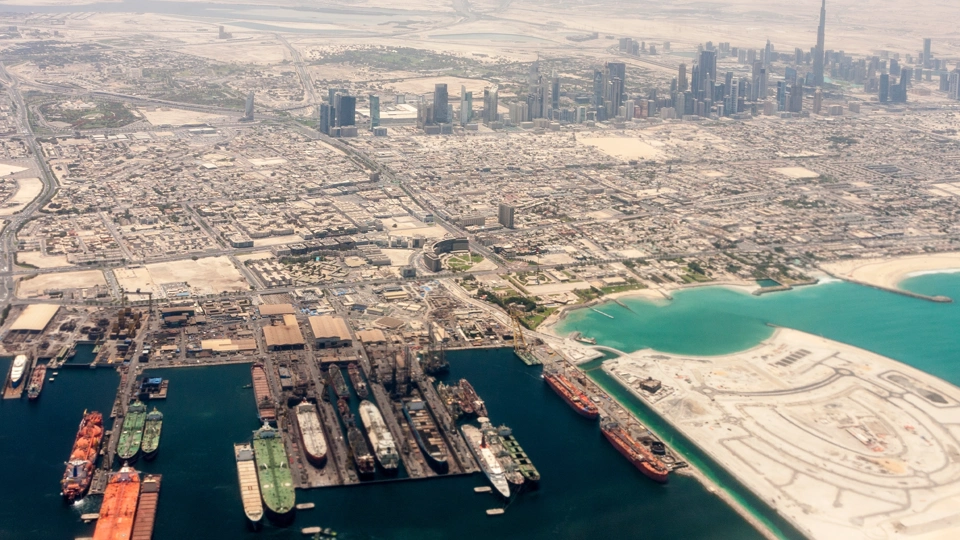
Across the Arabian Gulf, ports have become strategically important assets. They're no longer simply gateways for trade; they support energy exports, supply chains, industrial growth and national resilience. As governments invest in ports, logistics hubs and transport corridors, security needs to shape decisions from the beginning.
Yet security is still sometimes treated as a requirement to address later, rather than something that should influence planning and design. Early discussions focus on capacity, throughput, commercial performance and delivery. Security often comes into sharper focus once the masterplan is established. By then, many decisions that shape resilience have already been taken.
For strategic and dual-use ports, are we protecting the asset itself, or the capability it provides? In defence, resilience has long been considered in terms of the function that must be maintained. The priority is whether an asset can continue to do its job when conditions become difficult.
Ports rarely operate in isolation. Across the Gulf, many support industrial zones, manufacturing, transport networks, utilities and digital infrastructure. Their importance extends well beyond the port boundary.
“Some of the biggest problems on infrastructure programmes emerge at the interfaces. Individual systems may work as intended, but the operation can still be compromised because a dependency elsewhere has been missed.”
There can be projects where the main asset is ready to operate but the supporting infrastructure isn't, or projects where technical systems perform as designed while organisational or operational arrangements prevent the intended outcome.
Ports face the same risk. A facility can be physically secure and undamaged, yet struggle to operate if its power supply, communications, transport links or digital systems are disrupted. Understanding those dependencies is as important as protecting the facility itself.
Owners need to look beyond the perimeter. Which external services are essential? Where are the single points of failure, and what happens if a critical connection is lost? Addressing these weaknesses may do more for resilience than adding another layer of protection around the site.
Physical security, cybersecurity, surveillance and threat monitoring all matter. But disruption may also come from extreme weather, equipment failure, supply chain problems or the complexity of interconnected systems.
The question is what happens when disruption occurs despite those protections. Can essential operations continue? Which services take priority, and how quickly can the facility recover?
The defence sector has dealt with these questions for a long time. It doesn’t assume it can prevent every threat. Instead, planning focuses on keeping critical capability available in many conditions, even when systems or resources are compromised.
For infrastructure owners, this means identifying the functions that matter most, what they depend on and what happens if part of the system is unavailable.
“Responses might include alternative power or communications, redundancy in critical services or agreed priorities for operating during an incident.”
Resilience isn't just a measure of how well an asset prevents disruption. It’s also about how well it can continue to operate, adapt and recover when disruption happens.
That brings us back to where these decisions need to start: at the earliest stage of planning and design. Site selection, masterplanning, utilities, communications, access and operational layouts all influence how a port will perform under pressure.
Once berth locations, infrastructure corridors, access routes and critical facilities have been fixed, changing them can be difficult, expensive and disruptive. In our experience working across major projects and programmes, we’ve seen security requirements develop after a concept was already established, leading to redesign, complicated interfaces, procurement challenges and delays. Bringing those requirements up earlier gives the project more time to adjust and avoids retrofitting solutions later. There's a cost to getting this wrong, beyond the immediate redesign. Late changes can affect procurement, construction sequencing and the ability to test the finished facility properly. Operators may also have to manage compromises that earlier planning could have avoided.
Security specialists, planners, designers, engineers, operators and delivery teams need to work through the requirements together. Operational needs must inform the design, and those who will run the facility need to be involved before key decisions are locked in.
Project management plays an important role in bringing these requirements together. Security, design, commercial and operational considerations can't be managed as separate workstreams; their interfaces need to be understood and actively managed throughout the programme.
“It’s about maintaining a clear view of how decisions in one area affect another, and keeping the focus on the operational capability the project needs to deliver.”
The involvement of operators also needs to continue through commissioning and operational readiness. This is where the design is tested against the realities of running the facility. Having the right systems and infrastructure in place is only part of the picture; people, procedures and supporting services must work together when they're needed. Recovery arrangements also need to be understood and tested, rather than simply documented.
Resilience must be considered throughout the asset’s life, from investment decisions and design through delivery and into day-to-day operations.
A port’s value lies in what it makes possible: trade, energy, industry, logistics and, in some cases, national security. The measure of its resilience is not simply whether it can withstand a threat, but whether it can continue to fulfil that role when the pressure is on. Port developers who embed resilience into planning from day one will be the ones best placed to keep operations running when conditions change.

Sign up for our quarterly newsletter - trends, market intelligence and expert perspectives.
Sign up for our quarterly newsletter - trends, market intelligence and expert perspectives.