Market intelligence:
Australia and New Zealand H2 2026


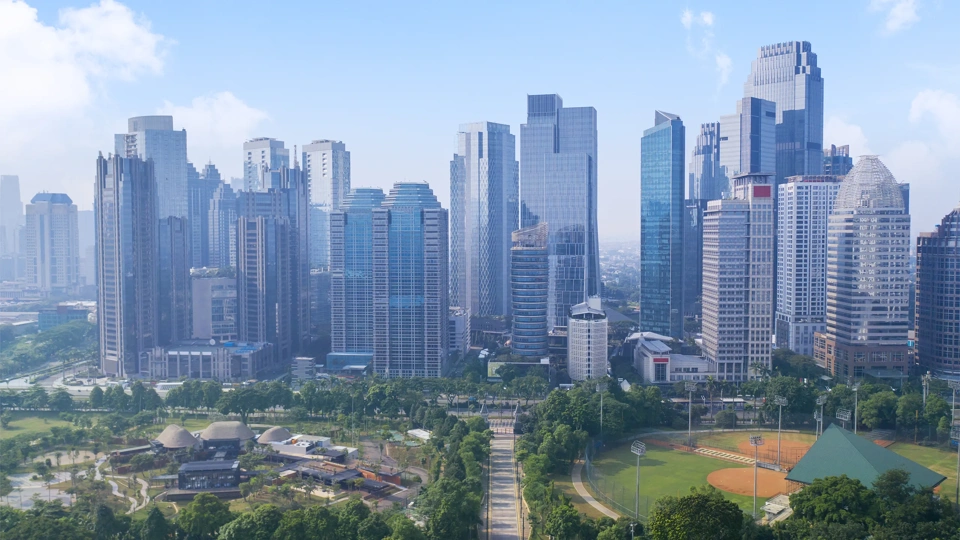

Most markets in Asia have felt cost pressure from the Middle East conflict this year, mainly through fuel. Indonesia’s rupiah has kept weakening, while nearby currencies stayed steady. This shift is changing how projects are priced and financed –Diesel prices alone don’t explain it.
Construction markets in Southeast Asia have spent this year absorbing the same shocks, to different degrees. The Middle East conflict has pushed global crude oil past US$100 a barrel and construction costs moved with it.
“In Indonesia, this pressure meant higher prices in fuel.”
Non-subsidised diesel, the fuel used in site generators, cranes and heavy plants, rose over 60% in weeks this year. Petrol prices also rose through June.
Contractors felt this directly in fuel bills and logistics costs, much like their counterparts across the region. Indonesia’s rupiah added a second cost pressure on top of that, one most neighbouring markets didn't face.
Our 2026 Global construction market intelligence report shows that energy shocks this year are landing indirect and uneven, varying by market depending on supply chain structure and energy dependence. Indonesia’s the sharpest illustration of that within the Southeast Asia region.
“The ringgit was Asia's best-performing currency through 2025 and it has continued strengthening in 2026, up close to 5% against the rupiah so far this year.”
The Singapore Dollar has moved further still, climbing roughly 7% against the rupiah since January to fresh all-time highs by May.
The rupiah itself crossed 18,000 to the US dollar for the first time in June. The Bank Indonesia has raised its policy rate to defend the currency, pushing up the cost of borrowing for anyone financing a project locally.
This currency divergence is impacting project economics more than diesel prices. It raises borrowing costs and increases prices for imported materials and equipment, and it also affects how confidently developers approve new projects.
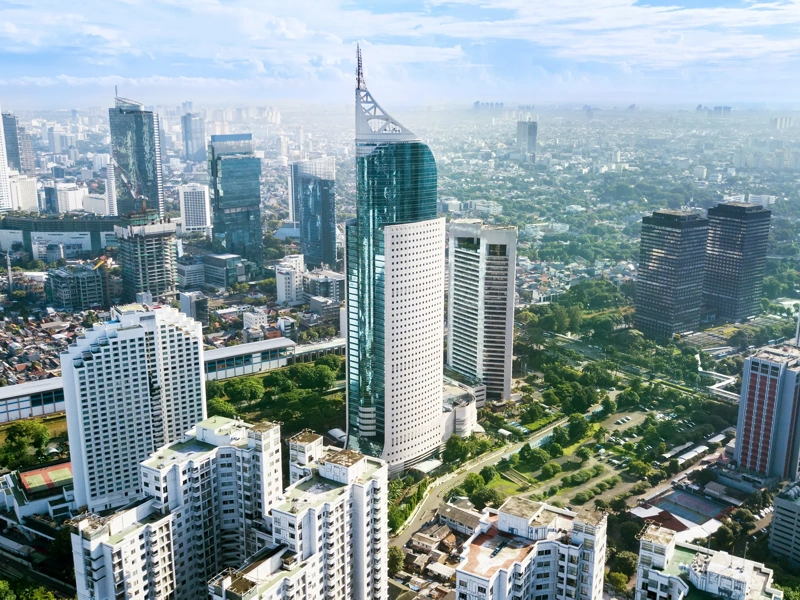
Jakarta and Denpasar rank 98th and 99th globally for construction costs in our 2026 report, both averaging US$1,090 per square metre across six building types, well below the numbers coming out of New York or Geneva. For a developer budgeting a project here, the range matters more than the average.
“The report puts Jakarta between US$864 and US$1,316 per square metre, a spread of more than 50%.”
This gap reflects the rupiah's impact on project costs, affecting both imported equipment and specialist plant as well as borrowing costs, with the Bank Indonesia keeping interest rates elevated to support the currency.
A project priced at the low end six months ago can land closer to the high end today without a single material rate changing. A static contingency line won’t catch that shift the way that a properly interrogated cost plan would.
Not every part of the market is pricing risk the same way, with two distinct project types keeping the foreign-funded side of the pipeline busy. Hyperscale data centre operators, largely Western and Gulf capital chasing AI and cloud demand, continue building in dollars across Batam, Karawang and the wider Jakarta belt regardless of what the rupiah is doing.
“These commitments run into the billions, including a US$1.7bn build in Karawang and Indonesia's largest-ever utility agreement for a single facility in Batam.”
At the same time, our report’s global data shows that data centres are the most capacity-constrained sector anywhere, allowing contractors to be highly selective and push margins to the highest levels recorded in the report.
Separately, industrial estates, logistics and warehousing capacity are expanding on the back of China+1 positioning, as manufacturers diversify supply chains away from a single-country base while keeping a foothold in China and look to Indonesia to add resilience.
Both segments are largely priced and funded outside the rupiah. However, domestic development diverges as rupiah-funded developers monitor the exchange rate closely and remain hesitant to commit to major projects before second-half sentiment settles.
Design and build is becoming the default for anyone wanting cost and quality certainty locked in early and foreign investors are asking difficult questions about local contractor capability before committing to lump sum.
“The local pool capable of absorbing this scale of demand, at this level of technical complexity, is still comparatively small and Chinese contractors have been winning ground on price in the meantime.”
Clients are responding by pushing risk-sharing into the contract itself rather than assuming it away. They increasingly want one team holding programme accountability across a fragmented supply chain, not a dozen consultants to coordinate themselves.
Labour costs tell a similar story to pricing, broadly stable on the surface and tighter underneath. Skilled trades, particularly anything touching digital infrastructure, mechanical, electrical or plumbing (MEP) or embodied carbon expertise, remain hard to secure even as some general contractors trim headcount elsewhere.
“Tender prices have held at the same 5-10% rising forecast since H1 2026, but that number hides real variation.”
Shorter project life cycles are pricing close to that baseline. Anything running long enough to sit inside further currency or conflict-driven uncertainty is carrying a heavier premium, because duration is now a risk factor in its own right.
Indonesia's construction market isn't reading one bill this half of the year, but two. One at the pump, familiar to every market affected by the Middle East conflict and one at the bank, unique to Indonesia and considerably harder to hedge against.
Navigating both well starts in the cost plan itself, separating currency exposure from material risk, rather than folding both into one generic contingency line. This continues through procurement sequencing and programme delivery built to absorb either shock without losing pace.
For clients weighing that balance into H2 and beyond, that’s a cost and programme conversation worth having early.

Sign up for our quarterly newsletter - trends, market intelligence and expert perspectives.
Sign up for our quarterly newsletter - trends, market intelligence and expert perspectives.