

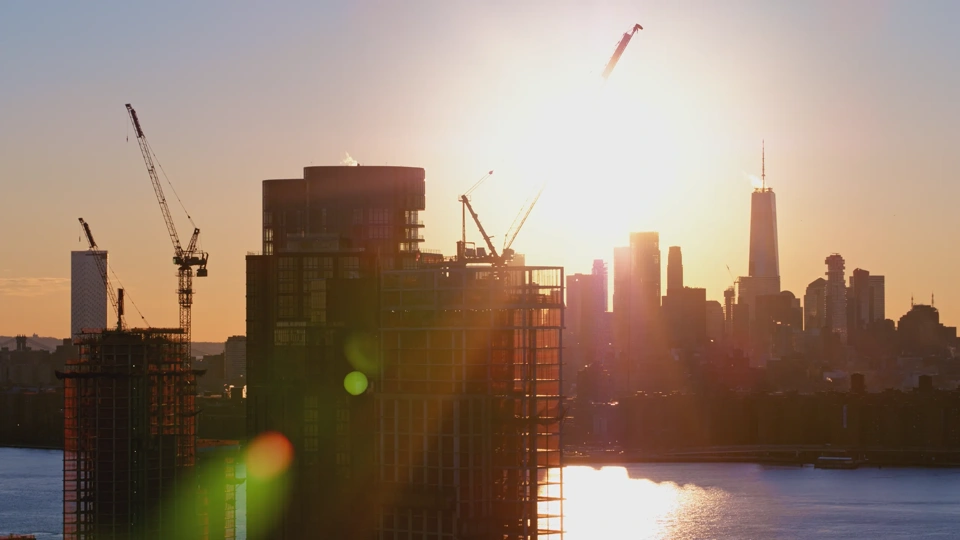

Access data and insights across 112 global construction markets and 44 countries.
Construction pricing dynamics are in a period of flux – shaped increasingly by local labour and supply chain constraints, sector demand and risk pricing in a volatile geopolitical environment. This requires more targeted and strategic decision-making.
Our Global construction market intelligence 2026 delivers a clear view of market performance worldwide – exploring risks, challenges and what’s next.
With data standardised in USD across 112 markets (including 13 new locations), it helps organisations benchmark costs, understand drivers and make smarter investment and delivery decisions.
What are the key findings from this year’s research?
A two-speed construction market
Tech-led sectors – particularly data centres and advanced manufacturing – are accelerating rapidly, driven by sustained digital and AI demand.
Meanwhile, more traditional sectors, including residential and commercial development, are experiencing slower momentum due to heightened uncertainty and structural constraints impacting investor confidence.
Cost inflation stabilising
Despite short term shocks, global construction inflation is expected to rise modestly from 4.2% in 2025 to 4.5% in 2026, before remaining broadly flat in 2027, while material price growth has largely steadied.
That said, pressure remains in some areas – particularly across mechanical, electrical and plumbing (MEP) components – where demand continues to outpace supply.
Labour shortages dominate
Labour shortages remain the most significant constraint, with over 70% of markets reporting skills gaps and little surplus capacity.
At the same time, contractor capability is tightening in high-growth sectors, increasing competition, pushing up margins and adding to delivery risk.
Risk landscape
Volatile energy prices due to the Middle East conflict are creating uncertainty, feeding through to some material costs, although impacts are uneven across regions.
Short-term logistics and supply chain stress in some locations is adding another layer of uncertainty for clients to manage.
Against this backdrop, success will depend on planning for local realities, engaging the market early and taking a more proactive approach to managing supply chain and energy risk.
Clients that invest early in digital capability and AI will be better positioned to navigate complexity, improve productivity and secure long-term advantage.
Key findings from the report include:
- Global construction demand is highest in the data centres and industrial and logistics sectors.
- Global construction cost inflation is expected to rise modestly from 4.2% in 2025 to 4.5% in 2026, before remaining broadly flat in 2027, despite the short-term impact of the conflict in the Middle East. A more stable cost backdrop should serve to encourage activity levels to rise.
- Labour availability is now the primary driver of cost increases, with Australia and New Zealand experiencing the most acute labour shortages, followed by Europe and Asia.
- North America has the highest regional labour costs with an average hourly wage of US$79.5, followed by Europe and Australia and New Zealand with US$75.6 and US$68.0, respectively.
- New York (£7,938 per m2) remains the most expensive construction market in the world, followed by San Francisco ($7,883 per m2) and Geneva ($6,985 per m2), with London ($6,032 per m2) ranking in fifth place.
Explore our flagship, data-led market intelligence reports






















































Get our latest insights direct to your inbox
Sign up for our quarterly newsletter - trends, market intelligence and expert perspectives.
Get our latest insights direct to your inbox
Sign up for our quarterly newsletter - trends, market intelligence and expert perspectives.