Market intelligence:
Tariffs and turbulence


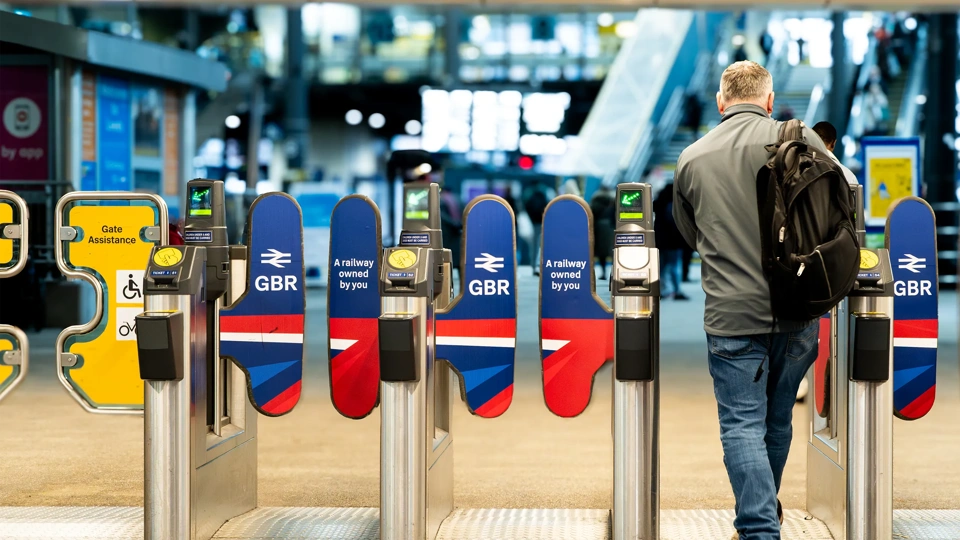
Great British Railways represents a rare opportunity to reshape Britain’s railway into a more integrated, customer-focused and financially sustainable system.
So far, much of the debate has focused on what Great British Railways (GBR) should look like structurally. But as the programme progresses, we need to give greater attention to the question that will ultimately determine its success: how will the transition be delivered? This is fast becoming the critical challenge facing the industry.
“Rail’s role is to connect people with places, opportunity and each other, whether that’s access to work, education, healthcare or support for regional growth.”
The vision for rail reform is compelling: clearer accountability, better customer experience and stronger long-term value for passengers and taxpayers. But the greatest risk is no longer defining the destination. It’s navigating the transition from today’s fragmented system to tomorrow’s integrated railway while maintaining performance, public confidence and affordability.
Railway doesn’t need another debate about what GBR should become. It needs confidence in how the transition will be delivered, while continuing to run a safe, reliable railway.
For decades, the UK rail sector has operated through a fragmented landscape of infrastructure owners, operators, regulators and government bodies. GBR is intended to act as the ‘guiding mind’, uniting these parts into a single system with shared outcomes.
“That ambition is essential, but structural reform alone won’t resolve the sector’s challenges. Reform should build on the strengths already embedded across the industry.”
With decades of operational expertise and a committed workforce that knows how to keep Britain moving, the sector has a strong foundation to draw on. The real opportunity is to equip those people with a simpler, more integrated system in which they can succeed.
Uncertainty remains around governance, procurement, accountability and delivery interfaces. These aren’t administrative details. They're the operational foundations of successful reform. History shows that large-scale change rarely fails because the vision is wrong, but because the complexity of the transition is underestimated.
Without careful delivery, we risk simply recreating fragmentation under a new model.
The real test for GBR will be whether it can move from vision to implementation without adding friction and inefficiency.
This must be achieved while maintaining reliability, managing constrained public finances and meeting rising passenger expectations. It demands far greater focus on sequencing, governance and network integration than we’ve seen so far.
GBR can’t succeed if organisations keep optimising their own performance rather than system-wide outcomes. That needs a shift in leadership behaviours too. We should judge decisions by their impact on the performance of the railway as a whole, not the success of one organisation or function.
Clear governance and decision rights must be established early across infrastructure, operators, regulators, devolved authorities and the supply chain. Without alignment, competing incentives and unclear accountability will keep driving inefficiency and delay. The industry must shift from programme-based thinking to whole-system accountability.
One of the biggest risks in any transformation is uncertainty between old models ending and new ones taking shape.
“For GBR, this transition phase is critical.”
Without clarity on how responsibilities and delivery interfaces will evolve, the industry risks hesitating at the moment momentum matters most.
Success depends not just on defining the future structure, but on building confidence in how change will happen, and on bringing people with it. The existing workforce holds invaluable operational knowledge, while new capacity will help build a stronger railway for the future.
Early visibility of priorities, sequencing and delivery models lets organisations plan, invest and align.
Structural reform alone won’t deliver long-term affordability. That depends on how well we plan, maintain and renew the railway’s asset base.
“Other sectors demonstrate the consequences of underinvestment.”
In water, for example, insufficient long-term investment has contributed to declining asset performance, reduced service reliability and a clear erosion of public confidence. Rail faces similar risks if long-term planning isn’t prioritised.
If GBR is to deliver a cost-efficient railway, whole-life asset planning must sit at the centre of decision-making. Investment should be driven by long-term value and resilience, not just short-term pressures. Better data and digital capability will support smarter system-wide investment decisions.
We don’t achieve affordability by reducing short-term investment, but by investing more intelligently.
Major infrastructure transformations succeed when delivery partners are engaged early.
The rail supply chain will provide essential capability, innovation and capacity. But suppliers can’t invest confidently without clarity on delivery models, procurement pipelines and priorities. Long-term confidence lets the market invest in people, innovation and capability across the sector.
“GBR has a chance to build different relationships with the market, one based on transparency, long-term planning and shared outcomes, rather than short-term transactions.”
Done well, this will reduce transition friction, improve delivery confidence and unlock greater innovation and value.
The next phase of reform requires a clear shift in focus, away from organisational redesign and towards delivery:
Passengers won’t measure GBR’s success by organisational design or its supply chain. They’ll judge whether the railway becomes more reliable, affordable, integrated and easier to use.
This is also about building trust and creating a railway that customers can rely on day-to-day. It must support smooth, end-to-end journeys across the wider transport network.
GBR has the potential to reshape how the railway operates and deliver a more integrated, customer-focused and financially sustainable network.
Achieving that ambition depends less on defining the right organisational structure than on delivering the transition with clarity, confidence and whole-system thinking, while keeping the needs of customers firmly at the centre. Ultimately, this is what will determine GBR’s success.

Sign up for our quarterly newsletter - trends, market intelligence and expert perspectives.
Sign up for our quarterly newsletter - trends, market intelligence and expert perspectives.