Market intelligence:
Budget 2027: Malaysia’s next growth advantage


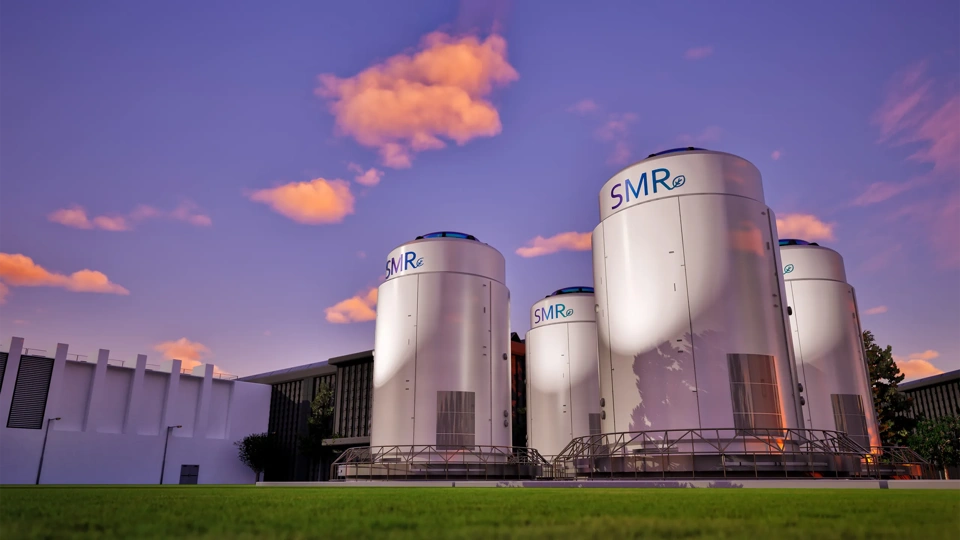
Canada has the nuclear foundations, the uranium resources and the technical know-how to become a leader in small modular reactor deployment. But strong starting conditions don't build projects. This article examines what it will actually take to move Canada's SMR ambitions from plan to delivery and where the real opportunities lie for governments, investors and industry.
Electricity demand across Canada is rising fast. Electrification, artificial intelligence, data centres, critical minerals development and advanced manufacturing are all placing new pressure on the grid. At the same time, government and industry want to decarbonise without losing economic ground.
SMRs won't solve this alone, but they could play a meaningful part. The challenge is no longer proving the technology, but delivering these projects safely, efficiently and repeatedly, at the scale this moment demands.
Few countries can match Canada's starting position.
Around three-quarters of Canada's 250 remote communities still rely on diesel power and roughly 178 remote Indigenous and northern communities remain disconnected from the North American grid entirely. Rather than a minor detail, this points to a clear advantage of smaller reactors: the ability to deliver power directly where it is needed.
The same logic applies to Canada's resource economy. Mining operations in Northern Ontario, Saskatchewan and the territories often sit far from major infrastructure. As governments push to grow domestic critical minerals production, reliable power close to site becomes a genuine competitive advantage.
“Canada's uranium industry adds another layer of strength. Its extensive mining, refining and fuel-processing capability supports both domestic energy security and its reputation as a trusted global supplier.”
Add to this Canada's long history producing medical isotopes for cancer treatment and imaging, and you get a country with real, proven experience operating complex nuclear facilities safely.
Demand is also increasing rapidly. Artificial intelligence, cloud computing and hyperscale data centres need large volumes of always-on power. SMRs could help meet that need while supporting broader decarbonisation goals. It's a rare case where industrial growth and climate targets can pull in the same direction.
None of this guarantees success. But it does mean Canada starts from a stronger position than most.
Here's the uncomfortable truth: interest in SMRs is high, but commercial deployment remains limited. First-of-a-kind projects come with cost uncertainty, long timelines, supply chains that are still maturing and regulatory requirements that demand precision at every step.
“The challenge isn't proving SMRs can work. It's proving they can be delivered on time, on budget and without the setbacks that have derailed other first-of-a-kind energy projects in the past.”
Three things will determine whether Canada gets this right:
1. Building investable frameworks. Investors want predictable risk and a clear revenue model. Emerging technologies often struggle here simply because they lack an operating track record. Renewable energy and storage faced the same hurdle years ago, and the sectors that succeeded did so by creating transparent commercial frameworks and standardising how projects were delivered. SMRs will need the same discipline; financing structures that balance public policy goals with commercial reality.
2. Getting risk allocation right. Large infrastructure projects perform better when risk sits with whoever is best placed to manage it. Governments are well suited to policy certainty, regulation and long-term planning. Private-sector partners are often better placed to manage design, construction and cost control. Public-private partnerships, backed by tools like loan guarantees and revenue-support mechanisms, may offer a practical way to align these responsibilities.
3. Building the supply chain and workforce. Scaling SMRs means growing a supply chain capable of producing specialised nuclear-grade components to strict safety and quality standards. It also means training more engineers, project managers, tradespeople and nuclear professionals to meet rising demand. The Canadian Nuclear Safety Commission has already taken steps to prepare for next-generation reactors, but this will require ongoing coordination between regulators, industry and project sponsors. And throughout all of this, Indigenous partnership needs to stay central, not an add-on. Meaningful engagement, workforce development and equity participation should shape how these projects are planned from the outset, not bolted on after the fact.
In the near term, Canada already has strong foundations to build on. The country's nuclear sector contributes around CAD 22 billion annually to GDP and supports tens of thousands of skilled jobs.
“The Darlington New Nuclear Project is set to deliver North America's first commercial grid-scale SMR, giving Canada early, practical experience in procurement, programme management and regulatory delivery that few other countries will have.”
In the medium term, the modular nature of SMRs opens doors well beyond energy. Many designs rely on factory-based production rather than traditional site construction, which can improve quality and reduce construction risk.
That plays directly to Canada's strengths in automation, precision engineering and specialised fabrication, and could support the growth of regional manufacturing hubs built around nuclear components.
In the long term, the biggest prize may sit outside Canada altogether. As more countries explore SMRs as part of their energy transition plans, demand will grow for proven expertise, quality components and reliable delivery capability.
Canada is well positioned to compete here, not just through reactor technology, but through engineering services, project management, nuclear-grade manufacturing, fuel-cycle capabilities and regulatory advisory work.
Canada has the ingredients: nuclear expertise, uranium resources, strong institutions and rising demand for reliable, low-carbon power. What happens next depends on decisions around investment, risk allocation, Indigenous partnership, supply chain development and programme delivery.
The countries that succeed with SMRs won't necessarily be those with the boldest plans. They'll be the ones that build the conditions to deliver projects consistently, project after project.


Sign up for our quarterly newsletter - trends, market intelligence and expert perspectives.
Sign up for our quarterly newsletter - trends, market intelligence and expert perspectives.