Market intelligence:
UK market intelligence



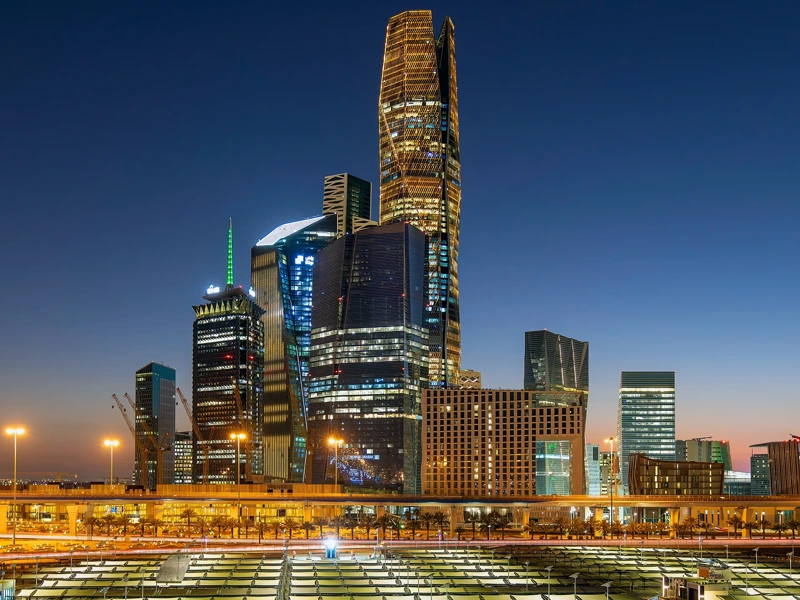
Saudi Arabia’s target is to lead the world in AI infrastructure. The real test isn't the scale of its ambition, it's whether the construction ecosystem can deliver it.
Over the past eighteen months, Saudi Arabia has announced new data centre developments, major investment commitments and ambitious capacity targets, all reinforcing its determination to become a leading AI infrastructure market. The scale of that ambition is clear. What gets less attention is what sits between the announcement and the switch-on: delivery.
Starting from a modest footprint a few years ago, Saudi Arabia is planning for growth measured in gigawatts, not megawatts. HUMAIN's plan to develop around 6 GW of data centre capacity by 2034 shows the scale of the opportunity, but it also highlights the gap between planned capacity and infrastructure that's actually operational and ready to support AI workloads.
That gap creates opportunity, while putting pressure on every part of the delivery ecosystem at the same time.
This is why what's sometimes labelled as "project delay", is often an oversimplified read of what's really happening. The industry is trying to deliver infrastructure at a scale it hasn't attempted before, in a market that's still evolving to GW delivery. Power, supply chains, specialist labour, permitting and commissioning are all being challenged at once. None of these pressures are unique to Saudi Arabia and none of them should come as a surprise.
“The real challenge is managing them across multiple campus developments running in parallel, rather than one project or campus at a time.”
We see many of these pressures play out in our Data centre construction cost index 2026-27. It shows how AI, cloud adoption and demand for sovereign capacity are driving record levels of data centre development, while adding pressure to power infrastructure, labour availability and project delivery. The more important question the index raises is whether the wider ecosystem can scale fast enough to keep up.
From what we're seeing, there are good reasons to think it can. Local markets are evolving, capability is growing, supply chains are maturing and companies with experience in established data centre markets are investing in the region. But pace depends on more than attracting outside expertise, it also depends on building the local, specialist capability needed to deliver, commission and operate increasingly complex facilities.
AI is changing how data centres are designed, but its effect on delivery is often misread. From a project perspective, many of the fundamentals haven't changed. Projects still need planning, procurement, stakeholder management, risk mitigation and strong execution.
“What's changed is the scale of the challenge.”
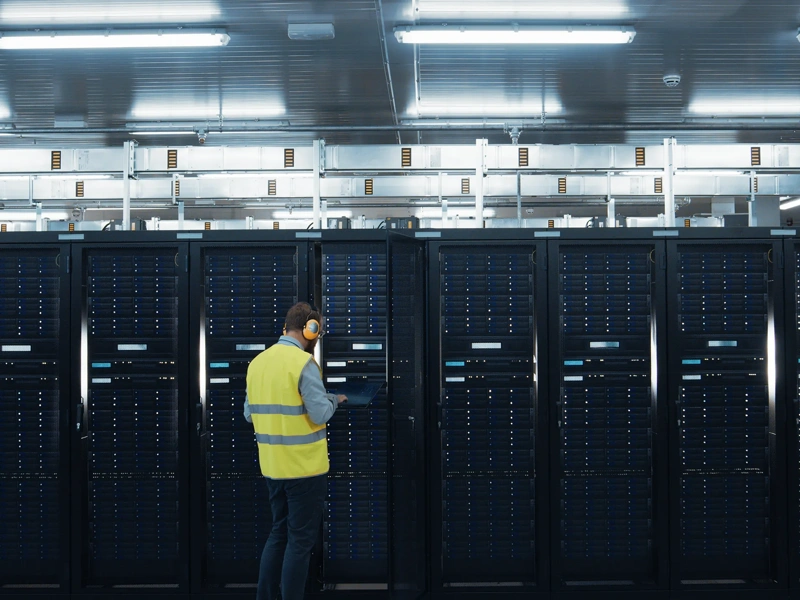
Higher-density AI workloads need far more power than traditional cloud environments, which means bigger electrical requirements, more advanced cooling strategies and more complex commissioning. In many ways, delivery teams are still solving familiar problems, but every decision now carries greater weight, every programme runs under more pressure, and every supporting function has to perform at the highest level.
The clearest lesson from recent hyperscale developments is the value of securing key dependencies early. Power comes first, closely followed by long lead equipment. Without certainty on either, holding to programme is much more difficult.
Power strategies need to be locked in as early as possible. Long lead equipment needs engagement and procurement well ahead of traditional timelines. Design decisions should be fixed early to avoid disruption later. Projects that delay these calls often build avoidable risk into their own delivery.
“The same goes for project and programme management.”
Some assume bringing in delivery expertise later in a project will save money. In practice, it's usually the opposite. The earlier programme controls, governance and delivery strategies are set up, the more scope there is to spot risks, coordinate stakeholders and protect programme certainty.
Developers also need to plan beyond a single facility, which is becoming common practice now. AI infrastructure increasingly needs a campus-wide view. Power, water, fibre and utility requirements should support long-term expansion, not just immediate demand. In Saudi Arabia, where high ambient temperatures place extra demands on cooling, early decisions on energy efficiency and cooling technology matter even more. What gets decided today shapes how well organisations can scale tomorrow.
One of the most encouraging signs in the market is the level of alignment forming across the wider ecosystem. Delivering AI infrastructure at scale needs collaboration between utilities, government entities, developers, operators, consultants, contractors and suppliers. No single organisation controls the whole delivery chain, so faster deployment becomes far more achievable when stakeholders are aligned around a shared goal.
This is where Saudi Arabia has a genuine advantage. Its ability to align stakeholders behind national priorities is helping create the conditions needed for large-scale AI infrastructure investment. Recent agreements to build power infrastructure to support AI data centres, show why bringing energy providers and developers together early matters.
“Success shouldn't be measured only by how fast a single facility gets built.”
The bigger opportunity is building a framework that can support gigawatt-scale development over the long term, which takes sustained coordination between government entities, utilities, operators and delivery partners. That's increasingly visible across the Kingdom, and it reflects a trend we see globally in our latest cost index: governments are recognising data centres as critical infrastructure that supports economic growth, innovation and national competitiveness.
At the same time, some of the industry's challenges are global in nature. Markets can build local capability, but specialist commissioning expertise, advanced AI hardware and parts of the technology supply chain remain fiercely contested worldwide.
Access to these resources will keep shaping delivery programmes as AI infrastructure deployment accelerates globally. For Saudi Arabia, the opportunity isn't just to compete for these resources, it's to build a sustainable delivery ecosystem that supports successive phases of growth. Building local expertise, strengthening specialist supply chains and developing long-term partnerships matter as much as securing investment in individual facilities.
Conversations about AI infrastructure tend to centre on technology, compute capacity and future demand. All of that matters. But our experience globally, backed by the findings in our latest cost index, points to a bigger issue: success depends on the industry's ability to deliver the supporting infrastructure that demand requires.
Power, labour, supply chains, sustainability, permitting and data sovereignty are becoming more interconnected by the day. As the industry scales, no single organisation can solve these issues alone, they need coordinated action across the whole ecosystem.
“Saudi Arabia has already made real progress in building the conditions for large-scale AI infrastructure development.”
The ambition is clear and the foundations are being laid. Challenges will keep surfacing as the market grows, but strong demand, government support, industry collaboration and growing delivery capability give good reason for confidence.
The technology will keep evolving. The real test is how well the wider ecosystem matures alongside it. Saudi Arabia is showing first hand how this can be achieved. Success won't be measured by the scale of its announcements, it will be measured by its ability to turn investment into reliable, operational capacity. Developers who match their focus on delivery capability with their ambitions for future capacity will be the ones who turn today's announcements into tomorrow's operational advantage.

Sign up for our quarterly newsletter - trends, market intelligence and expert perspectives.
Sign up for our quarterly newsletter - trends, market intelligence and expert perspectives.