Market intelligence:
Tariffs and turbulence


The best engineering solution still needs to arrive on time and within budget. Design tells you what to build. Delivery determines whether you build it well.
Infrastructure across the Kingdom of Saudi Arabia is entering a new phase. Urban development, new destinations and economic diversification have moved at an extraordinary pace. Now attention is turning to connectivity, to moving people, freight, utilities and services between the places already being created.
“Demand for rail, roads, airports, ports, logistics corridors and enabling infrastructure is rising fast and these networks can't be treated as separate assets.”
They need to work as one connected system and that system needs to catch up with the pace of the cities around it.
For infrastructure organisations and asset owners, that raises a different question. It's no longer enough to ask whether a technically sound solution can be designed. You also need to ask whether the many projects, contracts, interfaces and stakeholders involved can come together and deliver on time, to budget and to the standard required.
For infrastructure organisations and asset owners, a technically sound design is only the starting point. The real test is whether it is buildable, procurable, affordable and capable of being delivered within the required timeframe and the client’s risk appetite. The optimum solution sits at the intersection of engineering, commercial and delivery considerations. This is where an integrated PMC adds value, working with designers from the outset to test options, challenge assumptions and shape a solution that is both technically robust and commercially deliverable.
An integrated PMC isn't a collection of separate disciplines sitting side by side. Its value comes from bringing programme and project management, cost and commercial management, contract and claims management, project controls, risk, data and digital capability together around one set of objectives.
When these functions work in isolation, you end up with multiple versions of the truth: one view of schedule, another of cost, another of risk. When they work as a single system, you get a clear line of sight from contractual obligation through to physical progress, commercial exposure, forecast completion and operational readiness.
That's not an extra layer of administration, but a management system that protects your position, builds accountability and drives better delivery decisions.
Programme and project management sits at the centre of this model, establishing governance, aligning stakeholders and managing interfaces so decisions get made before problems become embedded.
On a large infrastructure programme, a single decision can ripple across several contracts. A utility delay, for instance, might restrict site access, reduce productivity, affect testing and ultimately push back the opening date.
“The strongest project managers connect those dots across technical, commercial and delivery teams rather than simply administering individual packages.”
Cost and commercial management then protects the investment itself.
With multiple contracts, delivery partners and funding sources in play, this means credible budgets, transparent forecasts, disciplined procurement and active change control, all linked to schedule, risk and physical progress.
A cost forecast that ignores delay, emerging claims or unresolved scope isn't a forecast you can trust.
Contract and claims management protects your position when things don't go to plan.
This isn't about creating conflict. It's about clarity: understanding responsibilities, managing notices correctly, assessing change consistently and keeping contemporaneous records.
Done well, this allows extensions of time and claims to be assessed fairly while preserving working relationships, and it means the strongest commercial outcomes are reached long before a dispute ever starts.
Project controls bring schedule, cost, risk, change and progress together into one picture, giving leadership the evidence to understand current performance and focus attention where it matters most.
Digital platforms support this by creating common data structures, automating repetitive reporting and connecting information across contracts. Artificial intelligence goes further still, spotting trends, testing scenarios and flagging anomalies faster than manual analysis ever could.
“The real opportunity is shortening the gap between data and decision, so experienced teams spend less time assembling information and more time interpreting and acting on it.”
Technology doesn't replace judgement or accountability. It works best when it sits inside a disciplined controls environment, backed by consistent data and people who understand the commercial and contractual context behind the numbers.
Risk needs to be part of the same system too. A risk register that's disconnected from schedule, cost and contracts is just a record. An integrated one shows how uncertainty could affect the outcome, who owns the response and whether mitigation is actually working.
With so many moving parts, delivery of complex infrastructure programmes has shown that the best engineering solution is not always the best solution for the client.
“A technically optimal design may create disproportionate cost, schedule, procurement, interface or contractual risk.”
Delivery should, therefore, not simply follow a completed design. The integrated PMC should work with the engineering team from the outset, advising on and testing design options against the client’s risk appetite, budget, programme, procurement strategy, operational requirements and wider delivery constraints.
This allows the engineering and PMC perspectives to shape an optimum solution together.Engineering defines and develops the technical solution, while the PMC ensures that it is affordable, procurable, buildable, contractually sound and aligned with the client’s objectives.
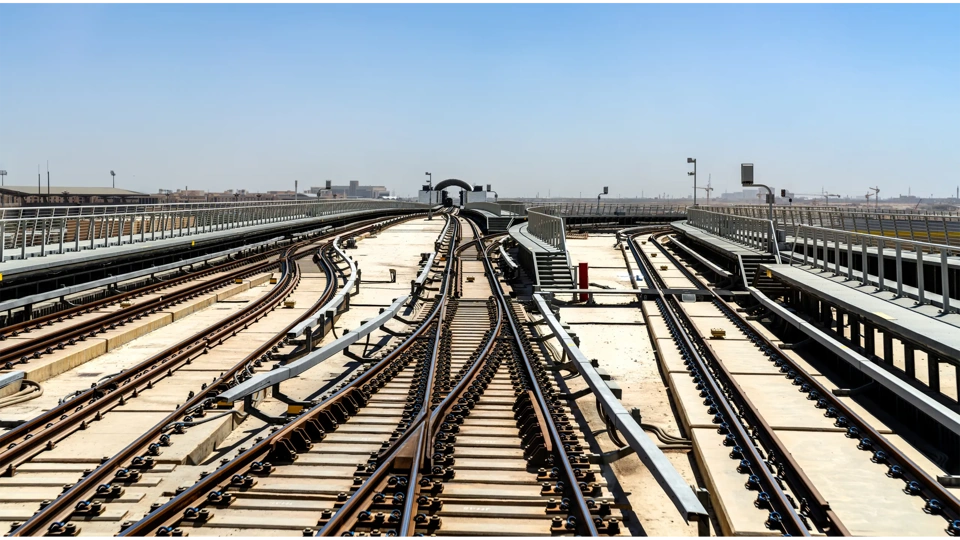
On complex rail programmes, some of the greatest value comes from making these decisions early, when design options can still be influenced and delivery risks can be avoided rather than managed later.
An integrated PMC keeps the purpose of the asset in view throughout, because completion isn't the same as successful operation.
“Railways, airports, roads, utilities and logistics networks need to be commissioned, accepted, maintained and operated as connected systems.”
That means operational readiness must start well before handover, with operators, asset owners and end users shaping planning, procurement, commissioning and maintenance decisions while change is still manageable.
Success should be measured not just by whether the asset was completed, but by whether it delivers the mobility, connectivity or economic benefits it was built for.
The next generation of PMC won't be judged by how many disciplines it deploys or how much reporting it produces. It will be judged by the how well it integrates delivery around a client's objectives.
Design and delivery capability will remain distinct but complementary: engineers will keep defining and resolving the technical solution, while the PMC creates the governance, commercial discipline, contractual clarity and controls needed to deliver it.
“As investment shifts towards mobility, freight connectivity and the infrastructure that supports economic growth, this capability only becomes more important.”
Infrastructure organisations and asset owners need an integrated PMC that can see across contracts and disciplines, anticipate consequences and protect the outcome.
Infrastructure clients, asset owners and delivery authorities need more than strong engineering. They need an integrated PMC partner who connects technical ambition with governance, commercial discipline, controls, interfaces and operational readiness. With that in place, assets perform as intended, arrive on time and within budget, and are ready for the demands placed on them from day one.

Sign up for our quarterly newsletter - trends, market intelligence and expert perspectives.
Sign up for our quarterly newsletter - trends, market intelligence and expert perspectives.