Market intelligence:
Tariffs and turbulence


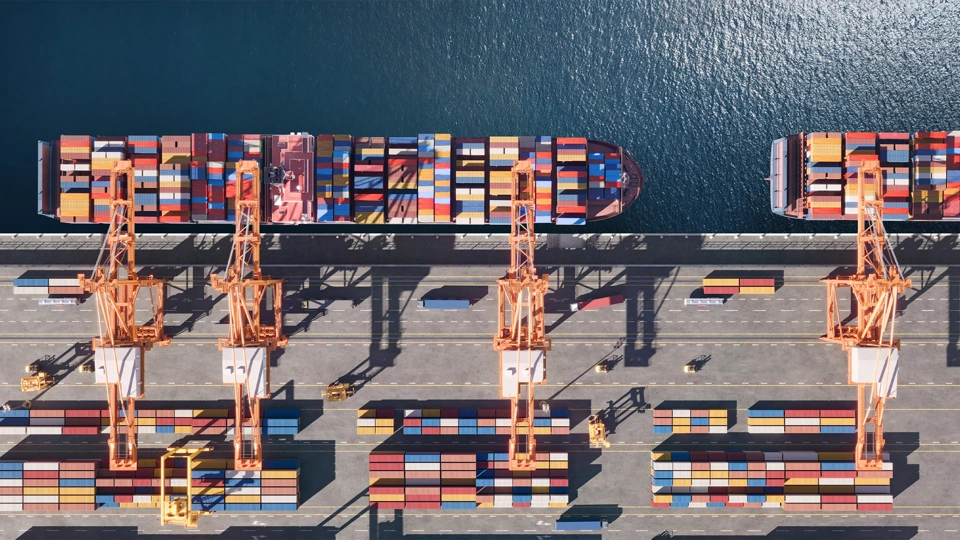

Carbon data is becoming a commercial asset. As carbon border charges enter construction supply chains, organisations that can prove material emissions will better protect budgets and choose suppliers with confidence. Poor carbon intelligence could prove an expensive weakness.
For developers, infrastructure owners and investors facing inflation and supply disruption, the immediate question is what the Carbon Border Adjustment Mechanism (CBAM) will add to project costs. The more useful question is whether there is a robust enough procurement process to capture the required information and reduce commercial exposure.
CBAM sets a carbon price on certain imported goods, mainly covering steel, aluminium and cement products. The price is based on emissions from the manufacturing process.
The EU’s definitive regime began in January 2026, and the UK mechanism is due to start in January 2027. Although the rules differ, both bring emissions information into commercial decisions. For global portfolios, this means checking each procurement route rather than applying one assumption across every market.
The distinction between actual emissions and default values matters. Where verified actual emissions are below the applicable default, evidence can support a lower liability. Without that evidence, a buyer may lose the financial benefit.
Transparency therefore has a value of its own. Two organisations buying comparable materials could face different outcomes because one can substantiate the emissions and the other can’t.
"Lower carbon production still matters, but its commercial benefit depends on being able to demonstrate it."
Better information will not automatically mean a lower charge. It will, however, give teams a firmer basis for assessing exposure and deciding where to act.
Procurement teams should treat emissions data as a core selection criterion alongside price, quality and programme, and test its credibility before contracts are agreed. A competitive quotation offers limited reassurance if the carbon assumptions behind it can't be checked.
Buyers need to understand the production source, which emissions are covered and whether the evidence meets CBAM rules. A general sustainability statement isn’t enough.
Consider two steel suppliers offering similar prices and delivery dates. One provides verified production emissions. The other can’t, so an industry average is applied. The first gives the buyer a basis for evaluating carbon exposure. The second leaves a gap that must be investigated and priced depending on the ETS price at the time.
"The practical lesson is to assess the material and its supporting information together."
Tender requirements should clearly state the data needed. Contracts should define who provides evidence, when it is delivered, and how carbon charges are handled.
Data centres are particularly exposed to CBAM costs because they demand high volumes of steel, aluminium and cement per square metre. The exposure level will change depending on how much material is imported. It will also depend on the carbon intensity of production. The sourcing routes will matter too. Finally, it will depend on which CBAM regime applies.
"For an operator delivering several facilities, incomplete supplier information can become a repeated budgeting problem."
Resolving that gap across a programme may create more value than making small material cuts on one project. Teams should test that proposition through modelling rather than assume it applies everywhere.
The same discipline matters for office developments, infrastructure and healthcare estates. Material intensity helps identify where to investigate. Verified information establishes what the exposure actually is.
Waiting weakens commercial control because procurement decisions made early determine exposure years later, and once a supplier is locked into a programme it becomes harder to change course or obtain missing evidence.
Longer programmes also need a view beyond the initial charge. In the EU, CBAM increases as the EU phases out free emissions trading allowances through to 2034.
"Carbon prices and supplier emissions will affect the final cost, so an estimate based on today’s conditions may give false comfort."
Cost plans should compare credible sourcing and carbon price scenarios, including the effect of using actual emissions or defaults. They should also distinguish the importer’s regulatory liability from costs passed through to the project under commercial agreements.
Early supplier engagement gives teams time to fix data gaps, explore options, and see how exposure may change.
Senior leaders should own the response by bringing procurement, commercial and sustainability teams together around the same material packages.
"Sustainability specialists can assess emissions evidence, while commercial teams can translate it into cost forecasts and contractual decisions."
Start with suppliers responsible for the greatest potential exposure. Establish what verified data they can provide, identify what's missing and assign responsibility for closing each gap. Feed those findings into cost planning and supplier selection while decisions remain open.
The organisations best prepared for CBAM will understand how evidence affects the price they pay. Making carbon intelligence part of routine commercial management helps leaders control future costs. It also supports stronger investment decisions.


Sign up for our quarterly newsletter - trends, market intelligence and expert perspectives.
Sign up for our quarterly newsletter - trends, market intelligence and expert perspectives.