Market intelligence:
Tariffs and turbulence


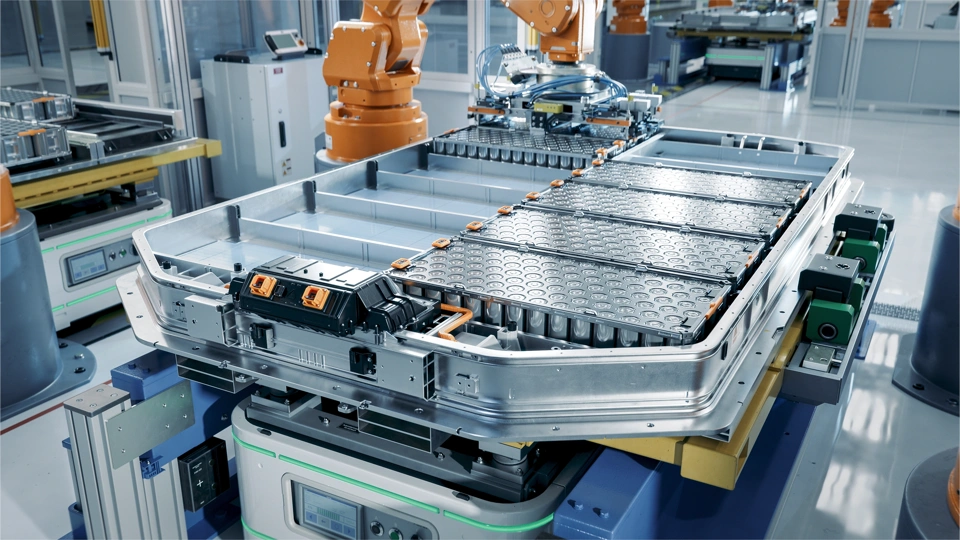

Major battery capital projects are emerging at an unprecedented rate, driven by the global regulatory push to ban internal combustion vehicle sales. Amid this race, Guillermo Martinez reflects on the key decisions clients need to take to set up their projects for success.
Demand for electric vehicles is soaring at a rate that many battery value chain stakeholders are battling to keep pace with. Global inflationary pressures are driving significant cost escalation for key materials, equipment and skilled labour, while pressure mounts from investors to obtain proof of future returns and for companies to capture market share.
Asian giants such as CATL, LG, SK and BYD have made significant investments in their home region and increasingly, they are turning their attention to the European and American markets.
As European and American players aim to make up ground and capture more market share, they need to consider how to achieve speed to market by accelerating their construction schedules, while forming sustainable long-term programmes.
Here are six critical themes that will drive overall programme success when developing a major capital investment in battery manufacturing.
The land take of gigafactories is significant, with several tens or even hundreds of hectares needed to install a full facility. Acquiring land at this scale – with the necessary logistical connections, access to a skilled labour pool and required green energy supply – comes with myriad challenges, especially in Europe where extensive land banks are more limited.
Land transactions are a time-consuming process and involve extensive technical and legal due diligence which is highly specific to the geopolitical context. An appointed transaction manager for real estate can effectively manage approvals and documentation, with an understanding of the local market context and relationships developed over time.
There is a need to understand all the risks and opportunities related to building an asset in a given location. From understanding the permitting needs, to benchmarking construction costs and mapping typical delivery models in the country, a comprehensive location study is paramount to getting the location right. Nominating a trusted, independent advisor such as Turner & Townsend to perform this study is an investment that several players in the industry have already made.
“Taking a programmatic approach here will improve clients’ ability to navigate local requirements, construction market specifics and potential cost pitfalls.”
If they can test the water with smaller-scale projects or project phases and take the initial learnings on board, this will smooth the process for later phases and assets.
Established battery manufacturing markets usually benefit from a well-developed supply chain, from raw materials extraction and refining, to production machinery. China, despite extracting most of its battery materials from elsewhere globally, has more than half of the global refining capacities for each key metal in a battery.
To accelerate the formation of a robust supply chain and limit dependence on China, battery players in emerging industry markets have started to secure access to raw materials through direct investment.
Some are deploying a portfolio approach, by building supplier parks close to battery manufacturing locations or hosting core parts of the battery lifecycle, such as recycling, within their production facilities.
“Governments have a strategic role to play here, by dedicating the strategic incentives to attract not only gigafactories, but all partners involved in the value chain.”
In the UK, for example, this includes the opportunity to benefit from lithium refining on the east coast of England. New development should consider co-location of related industries, such as battery recycling plants. Efficient repurposing resources helps to optimise the programme in a cost-efficient manner, while driving net-zero commitments.
That being said, the emergence of regional battery clusters as a result of such localisation can also be a limiting factor, creating extensive demand for resources from a common talent pool. This leads to regional construction supply chain bottlenecks, exacerbated local inflation and delays, particularly in specialty packages such as clean rooms or plant equipment.
Energy is intrinsically linked to location decisions, both in terms of cost and sustainability. Meeting the connectivity demands of a gigafactory via a national grid is incredibly complex and time-consuming.
While some locations may be ready to enable a first tranche to operate, future development phases would typically require a joint investment in the network with the national grid operator. In some countries, those processes are long and complex with up to 20-to-30-month lead times.
As global energy prices rise, especially in European markets, government engagement to make the case for supportive policy initiatives and tax incentives is increasingly crucial.
“Sharpening the net-zero credentials of new gigafactories is key to ensuring a consistently supportive policy environment as global governments continue to roll out new net-zero carbon targets.”
To facilitate this journey, organisations need to deploy carbon accounting as a core discipline. To assist this process, we have developed an innovative Embodied Carbon Calculator (ECC) – a bespoke carbon accounting tool that enables clients to evaluate the carbon footprint of projects from an early design stage, covering cradle to practical completion.
Most contractors have full order books at the moment, giving them the power to select the projects they service. However, as global markets see significant cost inflation not only for energy prices, but also for construction materials and labour, contracting margins are coming under severe pressure.
Typical fixed lump sum pricing models are often not accepted by today’s contractors given the current price volatility. In this environment, the risk allocation of traditional contracting models no longer holds water, and employers need to offer delivery models that both defend their interests and remain attractive to the supply chain.
“We can capture learn lessons from the data centre industry, where a design and build approach is gaining popularity.”
Under design and build, the contractor is appointed to fulfil end to end delivery through design and construction and held accountable to meeting performance. This offers greater programme certainty, as it increases the schedule risk transfer towards the contractor.
While these factors could be crucial when placed under tight time constraints, the downside is a decrease in cost certainty, a transfer of the design ownership and limited flexibility to change.
The approach becomes risky if concept design is immature or technological change is foreseen before completion. Decision makers must balance whether the risk of design ownership transfer is acceptable in the pursuit of short-term gains. These are not decisions to be rushed as they will set the tone for the programme.
Acute supply chain pressures are being felt not only in construction, but in the electric vehicle manufacturing industry as a whole, as global markets compete for raw commodities and critical components such as semiconductors.
Compounded by staggered client orders and volatility on operating costs, many organisations are breaking up gigafactory development projects into three or four phases, to incrementally increase volume of production over time as battery supply contracts are secured.
This allows fast returns on initial capacity and a progressive operational ramp, yet the initial project pace may prevent taking the necessary time to plan ahead. If the right balance is struck here between pace of deployment and future capability, organisations can achieve very strong competitive advantage.
“Battery manufacturers may wish to modularise factory sections within each phase, providing greater flexibility later if the process or machine characteristics change.”
Inevitably this does add to timescales, which many developers have decided does not suit the pace of demand and their ambitions to secure rapid return on investment.
An advantage to modularisation is greater flexibility for next generation technology in a fast-paced market. Understanding how new chemistries or manufacturing processes could develop, for example migrating from a wet to a dry electrode coating process, can help with forward planning. This avoids early obsolescence, limiting future production disruption and reducing construction costs as new generations of battery appear.
The successful delivery of major programmes is threatened by a revolving door of talent, which leaves gaps in the overall knowledge base and limits the ability to optimise through continuous learning. Current models see talent attracted from other fields such as automotive, oil and gas, and large consultancies to meet resource demands at the required pace.
Too often resource is also drawn from outside the region where the project takes place. This creates a lack of appreciation of how to apply best practice and a limited understanding of local contexts in terms of politics, rules and regulations. Some battery clusters are also hampered in attracting talent by being based in formerly depressed industrial regions or remote locations.
“For new gigafactory programmes, battery manufacturers would benefit from establishing a local skills base that understands the local market dynamics, recognising that this takes effort, time, attractive packages and long-term investments.”
Central to the attraction and retention of talent in today’s market is having a ‘green’ strategy and a brand that carries throughout all activities, giving candidates and current employees confidence in the organisation’s purpose. Employers in the industry will need to improve the actions that support their environmental pledges to keep talent knocking on the door.


Sign up for our quarterly newsletter - trends, market intelligence and expert perspectives.
Sign up for our quarterly newsletter - trends, market intelligence and expert perspectives.