Market intelligence:
Tariffs and turbulence


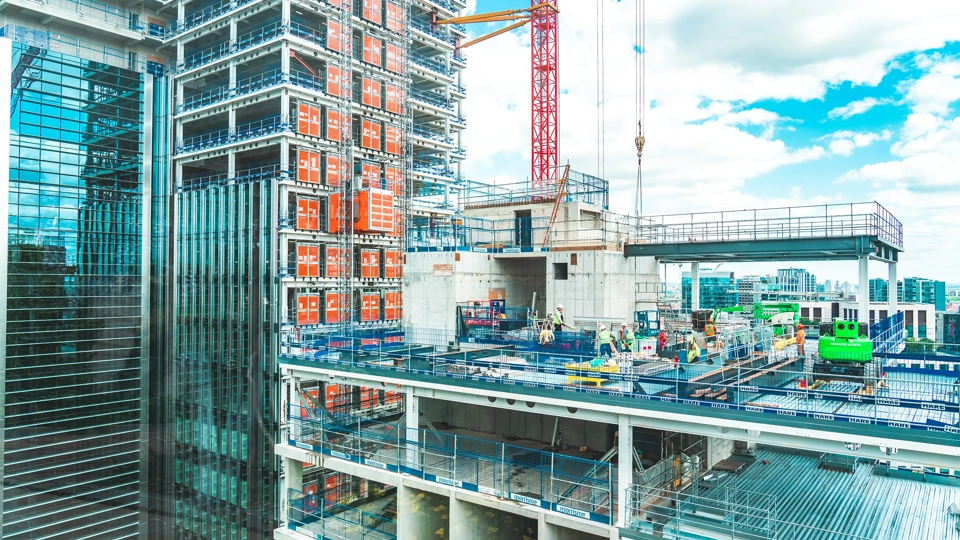
In the pursuit of building smarter, the construction industry is operating under a heavy shadow. Despite decades of advancements in engineering and design, we’re still struggling with a reputation for cost overruns and schedule delays.
The numbers back this up. A 2023 KPMG Global Construction Survey revealed that a staggering 37 percent of projects miss their budget or schedule targets by 20 percent or more.
“This isn’t just bad luck.”
It highlights a fundamental challenge in how we work: the persistent lack of accurate, reliable and timely data to inform decision-making and bring clarity to complex projects.
Too often, the primary drivers of cost inaccuracy stem from deficiencies in the initial brief. We see inadequate risk evaluation and a disconnect between design aspirations and budget realities. Without a robust foundation of historical data, Cost Managers often navigate these challenges with an incomplete map. This leads to reactive cost management rather than proactive value creation.
But the sector is shifting. With a portfolio that includes 30% of all projects and 50% of all major projects, we’re in a unique position to drive this change. We should move away from asking ‘what does it cost?’ to understanding ‘what should it cost?’.
Certainty in cost and carbon performance is critical for making informed decisions in today’s construction landscape. Achieving this certainty doesn’t rely solely on individual expertise. It requires systematic access to trusted, comparable data at scale.
When it comes to carbon, understanding the impact of construction projects on emissions is just as important as managing costs. The ability to measure, benchmark, and reduce carbon emissions depends on robust data collection and analysis.
“By gathering granular cost and carbon data from a wide range of projects, we create rich, historical datasets.”
These help us to benchmark new projects, identify trends, and understand the complex interplay of cost and carbon drivers.
By analysing robust data across thousands of projects globally, we can identify best-practice cost and carbon models across key sectors.
This approach benefits clients who join our sector benchmarking clubs. These clubs, set up with organisations in sectors like corporate occupier, life sciences and water, help members to use broad sector data. Members can validate decisions and drive more sustainable construction investments.
This marks a shift in the profession, from retrospective reporting to forward-looking, strategic advice grounded in evidence.
The pressure on the construction sector isn’t just financial. We face increasing regulatory and ESG expectations alongside rising client demand for early, data-backed decisions.
Clients today ask difficult questions. How confident is this cost? What does ‘good’ look like right now compared to last year? How do cost and carbon trade-offs affect long-term value?
“To answer these, we must integrate carbon as a ‘dual currency’ alongside cost.”
When cost, carbon and programme data align, organisations can shift from reactive cost control to proactive value management. The most effective clients use evidence from comparable assets, sectors and geographies to understand not just what a project should cost, but the carbon impact and costs over the lifecycle of the asset.
This intelligence allows for functional and parametric modelling that goes beyond traditional estimation. It enables teams to test scenarios early in the design phase, ensuring that sustainability targets are realistic and deliverable without blowing the budget.
The next evolution of cost consultancy isn’t about faster estimates. It’s about data-driven insight to produce accurate ‘should cost models’.
Robust data is redefining how construction projects are planned, assured and delivered. But this data can’t sit in silos. It requires robust digital environments to link cost and carbon through sector-wide evidence.
This is where platforms like The Hive come into play. By connecting every part of project delivery in one integrated system, we can mine and analyse market intelligence to inform better decisions. Providing full transparency on how projects perform and ensuring consistent reporting across global portfolios.
“AI is emerging as a powerful tool within these secure, governed data environments.”
It helps us process millions of data points to spot risks earlier and predict outcomes with greater precision.
This deep and accurate data also facilitates parametric modelling – a core function for Cost and Commercial Managers. By assuring viability at a project’s outset, we can reduce risks and programme durations, providing a robust brief for design and delivery teams.
The construction sector pricing is impacted by geopolitical events, volatile markets and how risk is managed within procurement. Yet many organisations still rely on fragmented or backward-looking data when making critical investment choices.
This creates inherent risk. It leads to misaligned designs, carbon targets that are difficult to deliver and limited visibility of value for money.
We need to rethink how we use robust data in early decision-making. It’s time to challenge traditional approaches to cost and carbon assurance and recognise the strategic value of integrated intelligence.
By linking cost and carbon through robust digital platforms and sector-wide evidence, the industry can move towards greater predictability, stronger value outcomes, and more sustainable and informed investment decisions.
It's time to stop estimating what projects cost and start defining what they’re worth.

Sign up for our quarterly newsletter - trends, market intelligence and expert perspectives.
Sign up for our quarterly newsletter - trends, market intelligence and expert perspectives.