Market intelligence:
Tariffs and turbulence


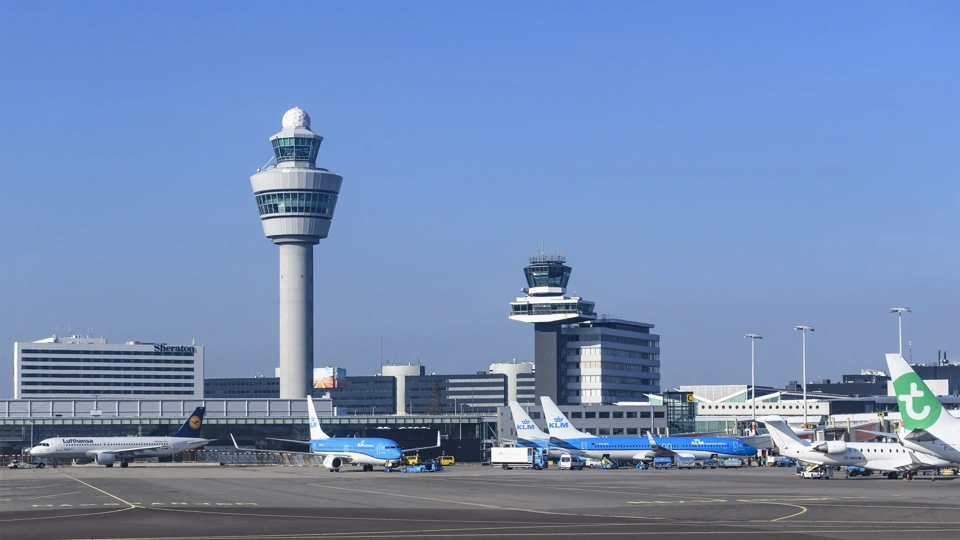
Most airport projects measure success by whether they open on time and on budget. But there's more to the story. The real test is whether the airport performs as intended from the first day of live operations, and whether it can sustain that performance for decades without the costs spiraling. Getting there requires decisions made long before the ribbon is cut.
The instinct to treat opening day as the finish line is understandable, but it's a trap. A new terminal or expanded pier doesn't become operational the moment construction ends. It becomes operational when documentation has been reviewed and approved by the teams who'll use it.
This is when systems are integrated airport-wide rather than tested in isolation, when staff and third-party stakeholders are trained on the actual facilities and when emergency recovery scenarios have been rehearsed – not just planned.
“The gaps that catch airports out aren't usually the obvious ones. It's the software licences that weren't transferred.”
The disaster recovery plan that existed on paper but was never tested. The maintenance contractor who arrived on day one without an agreed spares inventory. Readiness means closing out every one of those details, not just ticking off items on a project plan.
One of the most effective ways to protect an airport during the transition period is to structure contractor obligations correctly – before procurement, not after. When operations and maintenance terms are negotiated as part of the original capital contract, the airport retains leverage. When they're left until handover, it doesn't.
The most robust approach is to require the contractor, integrator or original equipment manufacturer to hold operations and maintenance responsibility through the defects period. This creates a direct financial incentive for quality.
“If the facility develops problems in its first year, the provider bears the cost of fixing them. A third-party maintenance contractor can take over once that period is complete, inheriting a facility that's been properly run in.”
Spare parts strategy follows the same logic. In aviation infrastructure, spare parts typically account for 2-5% of total system capital cost, with a further 1-3% of capital equipment value required annually for replacements and consumables – a figure that rises as systems age.
Reconciling manufacturer-recommended inventories against actual criticality, availability and mean time between failures criteria and locking in obsolescence agreements at contract stage, avoids a common and expensive problem: discovering the part you need is no longer manufactured.
Operational Readiness and Airport Transfer (ORAT) is the framework that prevents design, construction and operations from running as three disconnected phases. Its value isn't procedural. It's about verifying that every stage of a project is oriented toward the same outcome: an airport that works on day one.
In practice, that means operational teams witnessing commissioning, not just accepting reports. It means staff trained by the contractors who integrated the systems, not by a third party working from a manual. It means phased activation is treated as a sequence of integration steps, each one confirmed before the next begins, rather than a series of parallel go-lives that create untested inter-dependencies.
ORAT processes need to be repeatable and reproducible. When a new pier opens six months after the main terminal, the integration testing starts again – not from scratch, but from a defined baseline.
Workforce shortages and rising operating costs aren't problems that can be solved after an airport opens. The decisions that determine long-term operating expenditure are made during planning and design. Once the building is constructed, the options narrow considerably.
The most effective lever is designing for fewer people from the outset. Centralised security screening, for example, replaces one operator per lane with a model that concentrates staffing where it adds most value.
Climate control systems that respond to actual flight schedules – shutting down gate areas between departures and starting up ahead of arrivals – reduce energy consumption without any operational efficiency intervention.
Smart building and energy consumption management systems can reduce total energy use by 20 to 40%, with HVAC savings of 20 to 30%and lighting savings of 30 to 50%, according to studies by the American Council for an Energy-Efficient Economy and the US Environmental Protection Agency.
In terminals where HVAC alone accounts for 40 to 60%of total energy use, that's a material number. Automation in passenger and baggage processing can extend these gains further, but it needs to be designed with fallback in mind. A system that processes bags efficiently when it's working but causes widespread disruption when it doesn’t isn't an improvement. Automation should never compromise the passenger experience – it should enhance it.
Digital twins and AI-supported operations generate significant interest in airport development conversations. The technology is real and the potential is genuine. But both depend entirely on data that's structured, reliable and continuous from design through to live operations.
Data fragmentation is a bigger problem than most organisations acknowledge. According to Forvis Mazars, fragmented data results in US$1.8 tn in annual project losses globally, with 62%of data going unused.
In airport development, this often means asset information created during design exists in a format that's incompatible with the asset management system, or that different departments use different definitions for the same metric, making any AI-generated analysis unreliable.
“The fix isn't a technology purchase. It's governance.”
Building information modelling (BIM) requirements written into design and construction contracts. Shared data vocabularies, applied consistently across systems, platforms and departments. Data structured at the point of creation so it can be used in ORAT, in asset management and in live operations without manual translation.
When that foundation is in place, the tools that airports want to use – predictive maintenance, scenario modelling, large language model interfaces for analytics – become practical rather than aspirational. The data created when a system was designed becomes the data that tells you when it needs replacing.
The airports that operate well a decade after opening are the ones that treated operational readiness, maintenance strategy and data governance as design decisions, not handover tasks.
The questions worth asking at the start of a project are the same ones that determine whether the airport performs at the end of it: who’s accountable when something fails, how will staff know what to do, and will the data created today still be usable in 20 years?
Getting those answers right, early, is what separates a building that opens from an airport that works.

Sign up for our quarterly newsletter - trends, market intelligence and expert perspectives.
Sign up for our quarterly newsletter - trends, market intelligence and expert perspectives.